

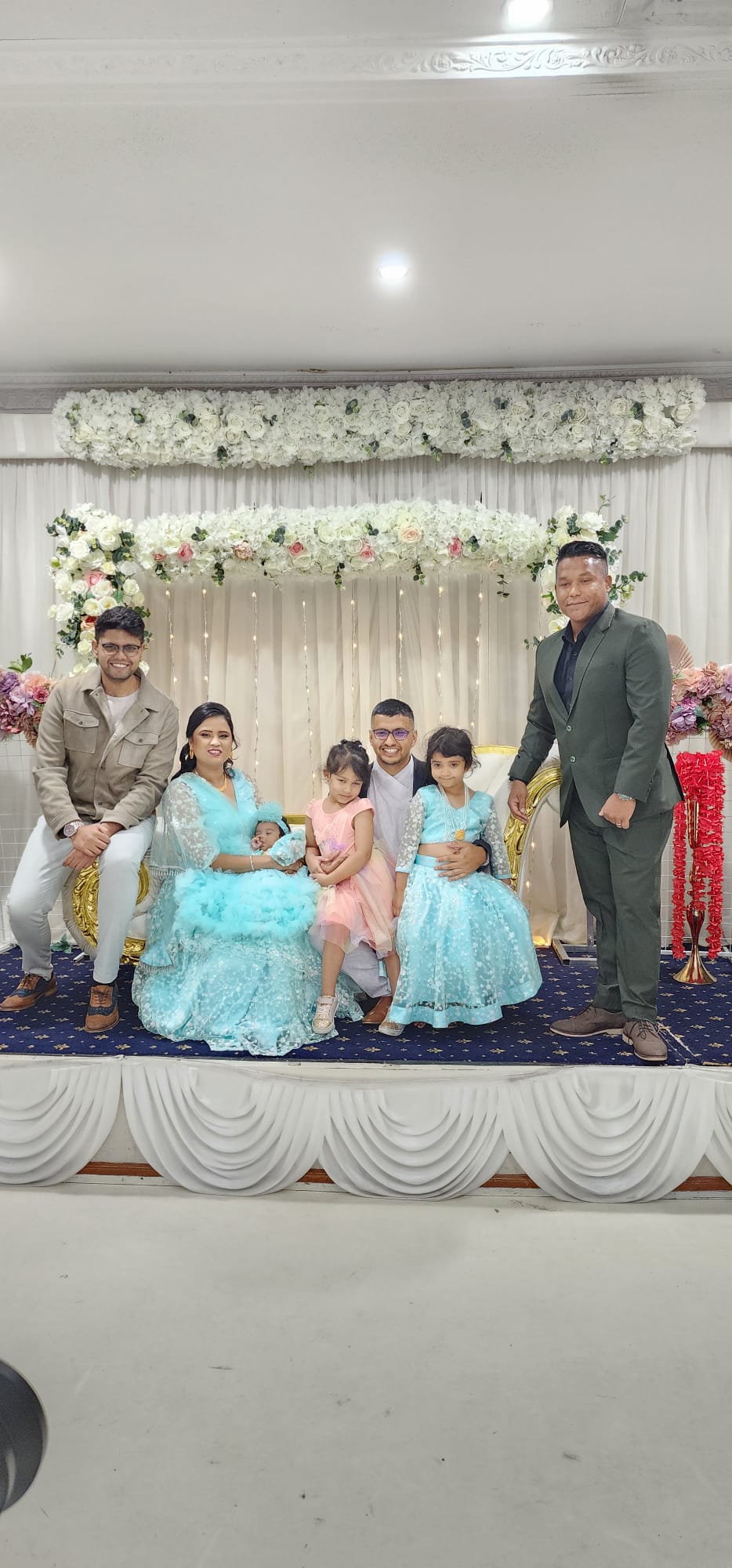
A weaning ceremony — Pasni, annaprashan, or whatever your family calls it — is one of the warmest events we host. It is also one of the trickiest to plan, because the ritual has a fixed order and the guest list tends to grow.
Start with the auspicious time
Most families have the timing set by a priest before anything else is decided. Bring that to your first conversation with any venue. A ceremony that must begin at 11:20am shapes everything downstream: when the room opens, when food is served, when the photographer arrives.
The room needs two zones
The ritual needs a defined space with room for the family to sit at floor level and for guests to see what is happening. The meal needs tables. Trying to do both in one layout is where the day goes sideways.
We usually set the ceremony area at the stage end with seating arranged in a wide arc, then flip the remaining floor to dining while the formal photographs are taken. That changeover takes our team about twenty minutes.
The families who enjoy the day most are the ones who handed the room over and let someone else watch the clock.
Food that suits three generations
Weaning ceremonies bring grandparents and small children into the same room, which makes the menu harder than a wedding. Plan for at least one mild option, a clearly labelled vegetarian section, and something plain for the children.
Worth deciding early
- Who is doing the rice feeding, and in what order
- Whether the items tray is brought by the family or arranged by the venue
- Where the elders will sit — close to the ritual, away from the speakers
- Whether you want the room flipped during photos or after
We have hosted enough of these to help with the run sheet if you want it. Bring the priest’s timing and a rough guest number, and we can work backwards from there.